
As one of the core courses in the logistics management major, “Logistics Cost Management” holds a pivotal position in the professional talent cultivation system. The course content is extensive, deeply integrating knowledge from management, accounting, economics, and logistics management, demonstrating a high degree of integration, technicality, and practicality. Against the backdrop of the continuous innovation of educational concepts, course-based ideological and political education has become an important direction for educational development. This article focuses on deeply exploring the ideological and political elements in the "Logistics Cost Management" course and actively seeking effective integration paths. By skillfully integrating ideological and political elements into professional knowledge teaching, it aims to achieve an organic unity of knowledge imparting and value guidance. On the one hand, this approach helps enhance students' comprehensive qualities, strengthen their sense of social responsibility and professional ethics awareness. It enables students to master professional skills while establishing correct values and professional conduct, becoming logistics talents with noble character and professional competence. On the other hand, this exploration also provides valuable references for the ideological and political construction of other professional courses. By sharing experiences and achievements, it promotes the overall teaching quality improvement of logistics management major courses in colleges and universities, facilitates the coordinated development of professional education and ideological and political education, and cultivates more high-quality talents with both virtue and ability for the logistics management major and the entire logistics industry, contributing to the healthy and sustainable development of the industry.
| Published in | Science Innovation (Volume 13, Issue 6) |
| DOI | 10.11648/j.si.20251306.14 |
| Page(s) | 157-161 |
| Creative Commons |
This is an Open Access article, distributed under the terms of the Creative Commons Attribution 4.0 International License (http://creativecommons.org/licenses/by/4.0/), which permits unrestricted use, distribution and reproduction in any medium or format, provided the original work is properly cited. |
| Copyright |
Copyright © The Author(s), 2025. Published by Science Publishing Group |
Logistics Cost Management, Curriculum-Based Ideological and Political Education, The Trinity, Value Innovation
问题维度 | 核心表现 | 产生后果 | 数据支撑 |
内容割裂 | 思政内容占比不足10% | 价值引导碎片化 | 教材内容分析 |
方法单一 | 讲授式教学占75% | 学生参与度低 | 课堂观察记录 |
评价失衡 | 思政评价占比少于15% | 育人导向弱化 | 考核方案分析 |
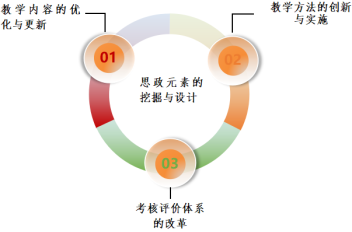
模块 | 子模块 | 思政元素 | 融入路径 |
教学内容的优化与更新 | “三位一体”价值导向内容体系 | 社会价值:绿色物流、碳排放成本核算、“双碳”目标分析; 企业价值:成本控制与社会责任案例(京东、顺丰); 消费者价值:物流服务与成本关系、“以客户为中心”意识 | 运输成本模块融入碳排放核算; 企业案例对比分析; 服务成本关联性教学 |
价值引领型教学资源 | 分类案例库(社会/企业/消费者价值); “价值三角”分析框架(如仓储成本的多维度关联分析) | 绿色包装、循环物流案例; 自动化改造的就业、效率、成本分析 | |
教学方法的创新与实施 | 价值体验式教学 | 三段式教学法:冲突→决策→反思; 数字化工具模拟价值影响(如物流价值沙盘) | “最后一公里配送”角色扮演 多主体谈判情境设计 |
创新互动教学方法 | 价值发现工作坊(实地调研) 企业导师进课堂 互动游戏强化价值关联认知 | 社区团购物流平衡分析; “物流价值”游戏 | |
考核评价体系的改革 | 价值导向评价指标 | 三维度评价:社会(绿色物流认知)、企业(成本效益)、消费者(服务创新) “价值平衡分析”专项评分 | 案例分析中三方优化方案设计 |
多元化评价方式 | “价值档案袋”(过程性材料收集) “价值提案”答辩 多主体参与评价(企业/消费者代表) | 三方共赢解决方案设计 设置“最佳价值平衡奖” |
| [1] | 刘抗英,王力锋.产学研合作与专业对接:高校物流成本管理课程教学改革的实践路径研究[J].物流科技,2025,48(19):167-169. |
| [2] | 宋佩华, 马小雅, 刘新全. 新文科背景下复合型物流管理人才培养探索与实践[J]. 高教论坛, 2025, (07): 84-87. |
| [3] | 杨慧.新文科背景下管理类课程思政建设的创新探索[J].昌吉学院学报,2025,(03):121-126. |
| [4] | 何林,龙宁斐.人工智能背景下《物流成本管理》课程线上线下混合式教学实施路径研究[J].商场现代化, 2025, (17): 48-50. |
| [5] | 杨洁颖, 潘新宇. 应用型本科院校人才培养实践与研究——以运输管理课程思政为例 [J]. 中国商论, 2021, (09): 181-183. |
| [6] | 孙小飞, 张娜, 李海立. 课程思政背景下论“情感态度与价值观”教学实施和考核评价 [J]. 高教学刊, 2024, 10(15): 85-88. |
| [7] | 林东宏. 绿色供应链背景下企业成本管理策略研究[J]. 中国市场, 2025, (29): 167-170. |
| [8] | 徐新华. 《企业物流成本管理》课程教学融入工匠精神的探索与实践 [J]. 物流科技, 2025, 48(13): 176-178. |
| [9] | 郑立平.三强三化三阶:开放教育课程思政建设质量提升研究——以电子商务概论课程为例[J].现代商贸工业, 2025, (21): 44-46. |
| [10] | 欧阳婷, 谷宗运, 杨银凤, 等. “互联网+智慧课堂”模式下专业课课程思政教学路径探索——以《医学信息学基础》课程为例 [J]. 电脑知识与技术, 2021, 17(27): 188-190. |
| [11] | 吴爱萍. 普通高校本科管理类课程教改方式探索性研究——以X学院物流管理专业“物流成本管理”课程为例 [J]. 创新与创业教育, 2023, 14(06): 153-158. |
| [12] | 阮伟卿. 以思政促进专业课程内容重构和建设——以电子商务物流课程为例 [J]. 物流工程与管理, 2023, 45(10): 158-160+147. |
| [13] | 田高良, 周芳, 李留闯. 会计学专业课程思政协同育人生态系统构建——基于西安交通大学的探索与实践 [J]. 会计之友, 2025, (14): 139-145. |
| [14] | 张颖. “电子商务与物流”课程思政教学设计与实践 [J]. 淮北职业技术学院学报, 2023, 22(03): 86-89. |
| [15] | 龚英, 黄顺泉, 胡坚堃, 等. 新文科背景下物流类专业思政与课程思政融合路径及措施研究 [J]. 物流研究, 2023, (01): 78-84. |
APA Style
Wu, A. (2025). Exploration of the Excavation and Integration Path of Ideological and Political Elements in the "Logistics Cost Management" Course. Science Innovation, 13(6), 157-161. https://doi.org/10.11648/j.si.20251306.14
ACS Style
Wu, A. Exploration of the Excavation and Integration Path of Ideological and Political Elements in the "Logistics Cost Management" Course. Sci. Innov. 2025, 13(6), 157-161. doi: 10.11648/j.si.20251306.14
@article{10.11648/j.si.20251306.14,
  author = {Aiping Wu},
  title = {Exploration of the Excavation and Integration Path of Ideological and Political Elements in the "Logistics Cost Management" Course
},
  journal = {Science Innovation},
  volume = {13},
  number = {6},
  pages = {157-161},
  doi = {10.11648/j.si.20251306.14},
  url = {https://doi.org/10.11648/j.si.20251306.14},
  eprint = {https://article.sciencepublishinggroup.com/pdf/10.11648.j.si.20251306.14},
  abstract = {As one of the core courses in the logistics management major, “Logistics Cost Management” holds a pivotal position in the professional talent cultivation system. The course content is extensive, deeply integrating knowledge from management, accounting, economics, and logistics management, demonstrating a high degree of integration, technicality, and practicality. Against the backdrop of the continuous innovation of educational concepts, course-based ideological and political education has become an important direction for educational development. This article focuses on deeply exploring the ideological and political elements in the "Logistics Cost Management" course and actively seeking effective integration paths. By skillfully integrating ideological and political elements into professional knowledge teaching, it aims to achieve an organic unity of knowledge imparting and value guidance. On the one hand, this approach helps enhance students' comprehensive qualities, strengthen their sense of social responsibility and professional ethics awareness. It enables students to master professional skills while establishing correct values and professional conduct, becoming logistics talents with noble character and professional competence. On the other hand, this exploration also provides valuable references for the ideological and political construction of other professional courses. By sharing experiences and achievements, it promotes the overall teaching quality improvement of logistics management major courses in colleges and universities, facilitates the coordinated development of professional education and ideological and political education, and cultivates more high-quality talents with both virtue and ability for the logistics management major and the entire logistics industry, contributing to the healthy and sustainable development of the industry.
},
 year = {2025}
}
TY  - JOUR
T1  - Exploration of the Excavation and Integration Path of Ideological and Political Elements in the "Logistics Cost Management" Course

AU  - Aiping Wu
Y1  - 2025/12/10
PY  - 2025
N1  - https://doi.org/10.11648/j.si.20251306.14
DO  - 10.11648/j.si.20251306.14
T2  - Science Innovation
JF  - Science Innovation
JO  - Science Innovation
SP  - 157
EP  - 161
PB  - Science Publishing Group
SN  - 2328-787X
UR  - https://doi.org/10.11648/j.si.20251306.14
AB  - As one of the core courses in the logistics management major, “Logistics Cost Management” holds a pivotal position in the professional talent cultivation system. The course content is extensive, deeply integrating knowledge from management, accounting, economics, and logistics management, demonstrating a high degree of integration, technicality, and practicality. Against the backdrop of the continuous innovation of educational concepts, course-based ideological and political education has become an important direction for educational development. This article focuses on deeply exploring the ideological and political elements in the "Logistics Cost Management" course and actively seeking effective integration paths. By skillfully integrating ideological and political elements into professional knowledge teaching, it aims to achieve an organic unity of knowledge imparting and value guidance. On the one hand, this approach helps enhance students' comprehensive qualities, strengthen their sense of social responsibility and professional ethics awareness. It enables students to master professional skills while establishing correct values and professional conduct, becoming logistics talents with noble character and professional competence. On the other hand, this exploration also provides valuable references for the ideological and political construction of other professional courses. By sharing experiences and achievements, it promotes the overall teaching quality improvement of logistics management major courses in colleges and universities, facilitates the coordinated development of professional education and ideological and political education, and cultivates more high-quality talents with both virtue and ability for the logistics management major and the entire logistics industry, contributing to the healthy and sustainable development of the industry.

VL  - 13
IS  - 6
ER  -
School of Economics and Management, Guangdong Technology College, Zhaoqing, China
Biography: 吴爱萍(1982.06-),女,江西丰诚,副教授,博士,研究方向:高等教育、区域经济、绿色物流

Information



 Share This Article
 Twitter
 Linked In
 Facebook
 Copy
Copy Download